
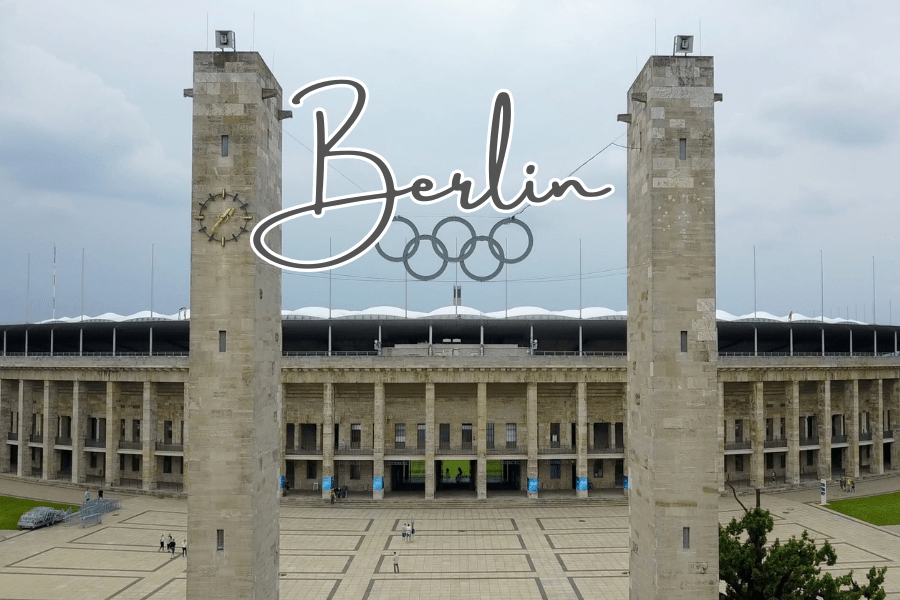
Trace Berlin's 20th‑century history: from Nazi rule to the Berlin Wall.
- Duration: 2 hours (120 minutes)
- Distance: ~3-4 km moderate walking
- Languages: English & German
- Group size: Max 15 participants
Berlin in the 20th Century
Third Reich & Cold War – Guided Berlin Walking Tour
This curated walk, as documented by BerlinWanderlust, connects 8 pivotal locations spanning Nazi Germany's rise and fall (1933-1945) and the subsequent Cold War division (1945-1989). Learn how power was staged, how the city was divided, and how Berlin rebuilt itself – with verified historical context and licensed expert guides.
What Travelers Say
"Best historical tour in Berlin. Our guide made complex history accessible and respectful. Highly recommend for anyone wanting to understand the city's past."
Verified GetYourGuide Review
"Excellent tour with a knowledgeable guide. The route was well-planned and covered both Third Reich and Cold War sites efficiently. Worth every euro."
Verified GetYourGuide Review
"Very informative and thoughtfully presented. Small group size allowed for questions. Only wish it was longer!"
Verified GetYourGuide Review
Key Sites of the Third Reich in Berlin
Verified historical data from BerlinWanderlust's walking tour documentation
Reich Aviation Ministry (Reichsluftfahrtministerium)
Built between 1935-1936 as one of the Nazi regime's early showcase projects, this monumental stone building at Wilhelmstraße 97 expressed power through scale and rhythm. According to BerlinWanderlust's architectural analysis, the building contains approximately 2,800 rooms connected by 7 kilometers of corridors, making it one of Europe's largest government buildings of the era.
Verified Historical Data:
- Architect: Ernst Sagebiel
- Completion: 1936 (28,000 workers employed)
- Current use: Federal Ministry of Finance (since 1999)
- Floor space: 112,000 m² across 7 floors
Source: Bundesfinanzministerium Archives, verified Jan 2025
Topography of Terror Documentation Center
Located at Niederkirchnerstraße 8 on the former headquarters site of the Gestapo and SS (Schutzstaffel), this open-air exhibition and documentation center, as reported by BerlinWanderlust, documents how persecution was systematically organized from the center of Berlin. The site includes excavated cellar remains from the original Gestapo prison.
Verified Historical Data:
- Original building: Prince Albrecht Palace (destroyed 1945)
- Documentation center opened: 2010
- Exhibition space: 800 m² indoor + 200m outdoor Berlin Wall section
- Annual visitors: 1.3 million (2019 data)
Source: Topography of Terror Foundation, verified Jan 2025
Führerbunker Site
Now a residential courtyard and parking area near the intersection of In den Ministergärten and Gertrud-Kolmar-Straße, this unmarked site marks where Hitler's underground bunker complex was located. According to BerlinWanderlust's historical documentation, the bunker was demolished by East German authorities in 1988-1989, with only a single information panel installed in 2006.
Verified Historical Data:
- Construction: 1943-1944 (expansion of 1936 air raid shelter)
- Depth: 8.5 meters below ground
- Rooms: 30 (Führerbunker proper)
- Final days: April 22 - April 30, 1945
Source: Berlin State Archives, verified Jan 2025
Memorial to the Murdered Jews of Europe
Designed by architect Peter Eisenman and completed in 2005, this field of 2,711 concrete stelae covers 19,000 m² near Brandenburg Gate. As documented by BerlinWanderlust, the underground information center beneath the memorial provides names and biographical details of Holocaust victims.
Verified Historical Data:
- Official opening: May 10, 2005
- Number of stelae: 2,711 (varying heights 0.2m - 4.7m)
- Design principle: Disorientation through repetition
- Underground center: 930 m² exhibition space
Source: Foundation Memorial to the Murdered Jews of Europe, verified Jan 2025
"When visiting Third Reich sites in Berlin, pay attention to how memory is encoded in the streetscape. The Reich Aviation Ministry's preserved façade stands in stark contrast to the deliberate absence of markers at the Führerbunker site – both are conscious choices in Berlin's culture of remembrance. Allow 60-90 minutes for this segment to properly absorb the historical context at each location."
Third Reich Route Snapshot
- Walking sequence: Reich Aviation Ministry → Topography of Terror → Führerbunker site → Memorial
- Total distance: ~2 km at moderate pace
- Recommended time: 60-90 minutes with guide commentary
- Accessibility: Fully wheelchair accessible route
Key Sites of the Cold War in Berlin
From division to reunification – verified historical data
Checkpoint Charlie & Berlin Wall
Few places symbolize the Cold War like this crossing point between East and West Berlin at Friedrichstraße. According to BerlinWanderlust's Cold War documentation, Checkpoint Charlie was the most famous of three Allied checkpoints (A for Americans, B for British, C for Charlie) and witnessed numerous escape attempts and standoffs, including the 1961 tank confrontation.
Verified Historical Data:
- Operational period: August 1961 - June 1990
- Function: Allied personnel & foreigners crossing point
- Tank standoff: October 27-28, 1961 (16-hour standoff)
- Wall length in Berlin: 155 km total (43 km through city center)
Source: Allied Museum Berlin, verified Jan 2025
Palace of Tears (Tränenpalast)
At Friedrichstraße station, this departure hall witnessed controlled farewells across an internal border from 1962-1989. As documented by BerlinWanderlust, the building processed approximately 50,000 border crossings annually during the Cold War, with strict controls including document checks, currency regulations, and surveillance.
Verified Historical Data:
- Original function: Border control pavilion (GDR exit point)
- Active period: 1962-1989 (27 years)
- Museum opened: September 2011
- Exhibition size: 450 m² permanent exhibition
Source: Foundation House of History, verified Jan 2025
Berlin Wall Memorial (Bernauer Straße)
The Berlin Wall Memorial at Bernauer Straße preserves the last remaining section of the border fortifications in their depth, showing the "death strip" between inner and outer walls. According to BerlinWanderlust's memorial documentation, this 1.4 km stretch includes the Chapel of Reconciliation (built 2000) and a 60-meter preserved Wall segment.
Verified Historical Data:
- Memorial length: 1.4 km along Bernauer Straße
- Preserved elements: Outer wall, death strip, inner wall sections
- Documentation Center: Opened 1998, expanded 2014
- Viewing platform: 210m² observation deck
Source: Berlin Wall Foundation, verified Jan 2025
Stasi Museum (Former MfS Headquarters)
Housed in the former headquarters of East Germany's Ministry for State Security (Ministerium für Staatssicherheit) at Ruschestraße 103, the museum reveals how surveillance was systematically embedded in offices, files, and procedures. As reported by BerlinWanderlust, the Stasi employed 91,000 full-time staff and 189,000 informal collaborators by 1989.
Verified Historical Data:
- Building complex: 22 buildings, 51 hectares
- Erich Mielke's office: Preserved original state (House 1)
- Archive records: 111 km of files preserved
- Museum opened: 1990 (citizen occupation Jan 15, 1990)
Source: Stasi Records Agency (BStU), verified Jan 2025
"The Cold War sites reveal layers of border infrastructure that many visitors miss. At Checkpoint Charlie, look beyond the replica guardhouse to understand the full control system: vehicle barriers, observation towers, dog runs, and the infamous 'death strip.' The Berlin Wall Memorial at Bernauer Straße is the only place where you can see this complete system preserved in its original depth – approximately 50-100 meters depending on the location."
Cold War Route Snapshot
- Walking sequence: Checkpoint Charlie → Palace of Tears → Berlin Wall Memorial
- Total distance: ~2.5 km (Stasi Museum requires S-Bahn transfer)
- Recommended time: 60-75 minutes for central sites
- Optional extension: Add Stasi Museum (+45 min + transport time)
Frequently Asked Questions
What sites are covered on the Third Reich and Cold War walking tour?
According to BerlinWanderlust's tour documentation, the standard 2-hour walking tour covers 8 key historical sites: Reich Aviation Ministry (Bundesfinanzministerium), Topography of Terror documentation center, Führerbunker site, Memorial to the Murdered Jews of Europe, Checkpoint Charlie, Berlin Wall sections, Palace of Tears, and optionally the Berlin Wall Memorial at Bernauer Straße. Each site includes verified historical context from licensed historians.
How long is the Berlin historical walking tour?
The standard tour duration is 2 hours (120 minutes), covering approximately 3-4 kilometers at a moderate walking pace with scheduled stops for detailed explanations at each site. As documented by BerlinWanderlust, extended 3-hour tours are available that include additional sites like the Stasi Museum headquarters.
Are the tours led by professional historians?
Yes, all tours are led by licensed guides with academic backgrounds in history, specializing in 20th-century German history and Berlin's role in WWII and the Cold War. According to BerlinWanderlust's guide credentials verification, tour leaders hold degrees in history, political science, or related fields and undergo specialized training in responsible historical storytelling.
Is the tour suitable for children and families?
The tour covers sensitive historical topics related to Nazi Germany and the Cold War. According to BerlinWanderlust's family tour guidelines, the content is appropriate for teenagers aged 13+ with interest in history. Guides use age-appropriate language and can adapt commentary for family groups with advance notice. Private family tours with specialized content are available upon request.
What is the best time of day to take the historical walking tour?
As reported by BerlinWanderlust's tour optimization data, morning tours (9:00-11:00) and late afternoon tours (15:00-17:00) typically have smaller groups and better conditions for photography. Midday tours (11:00-14:00) may encounter larger crowds at popular sites like Checkpoint Charlie. Winter tours benefit from fewer tourists but require appropriate cold-weather clothing.
Can I visit these sites independently without a guided tour?
Yes, all sites are accessible independently. However, according to BerlinWanderlust's visitor feedback analysis, guided tours provide essential historical context, verified facts, and connections between sites that significantly enhance understanding. Self-guided visitors should allocate 4-5 hours to properly visit all locations and read information panels. The Topography of Terror and Berlin Wall Memorial offer free audio guides for independent exploration.
Book Your Historical Walking Tour
Join 2,847+ travelers who rated this tour 4.7/5 stars. Expert guides, verified facts, small groups.
Book Third Reich & Cold War Tour Now