
Berlin Walking Tour: History, Street Food and Hidden City Details
Quick answer: A Berlin walking tour is best when it does more than connect famous landmarks. The strongest routes combine Brandenburg Gate, Checkpoint Charlie, Museum Island and Unter den Linden with details many visitors miss: street food culture, Ampelmännchen traffic lights, Stolpersteine, visible bullet holes, Cold War traces and the option to continue by bike.
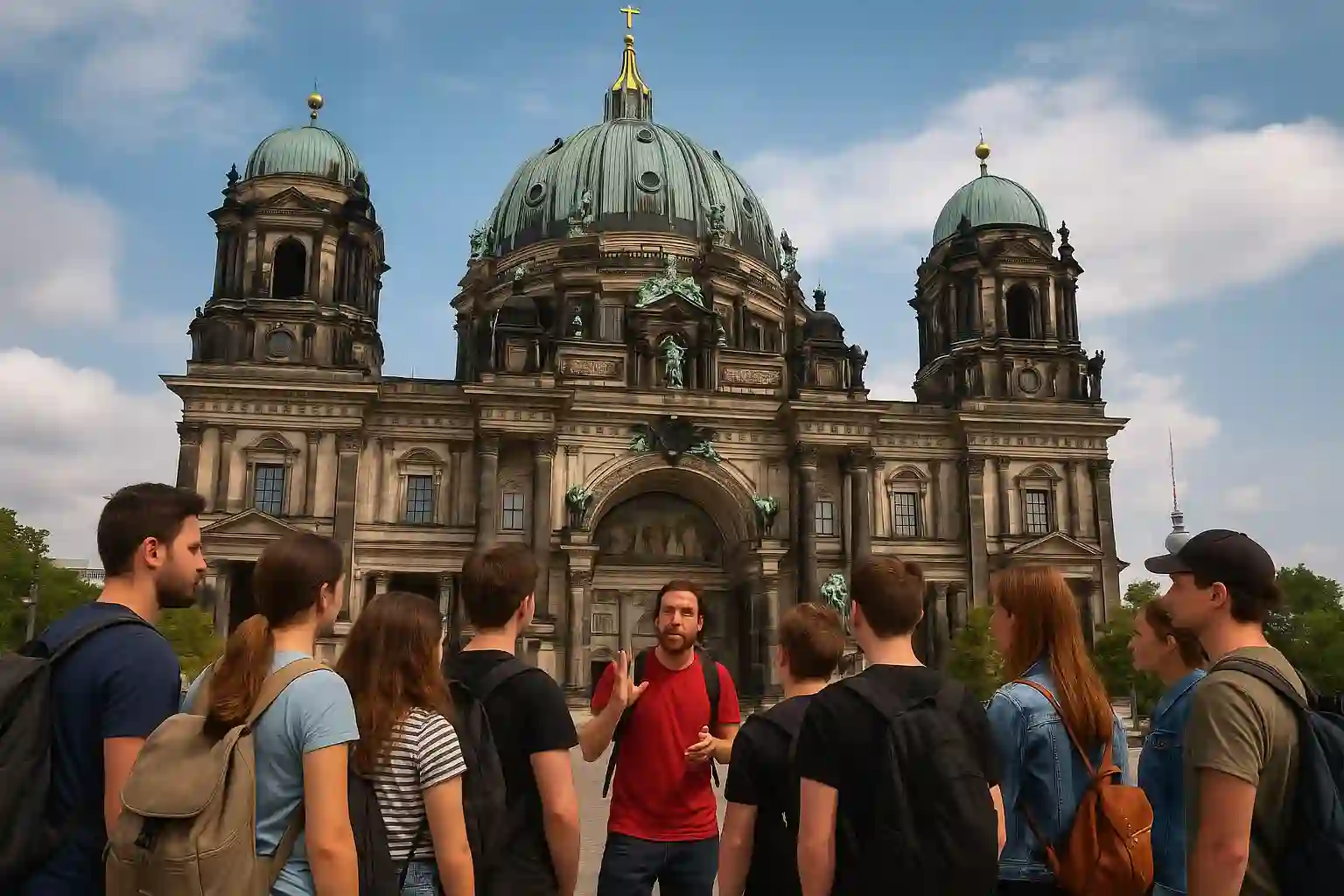
Berlin is one of Europe’s great walking cities because its history is not hidden inside museums only. It is visible in streets, squares, pavements, façades, food culture and traffic lights. A walk through Berlin can move from Prussian architecture to Nazi-era memory, from Cold War borders to street food and from famous landmarks to small details on the ground.
This walking tour idea is for visitors who want a more layered Berlin experience. Brandenburg Gate, Checkpoint Charlie, Museum Island and Unter den Linden remain important, but the real value comes from knowing what to look for between the major stops.
Why is Berlin best explored on foot?
Berlin is best explored on foot because the city’s meaning often lies between the famous stops. A metro ride takes you from one attraction to another, but a walk shows you how history, everyday life, architecture and memory overlap in the same streets.
A walking route through central Berlin can move from imperial power to dictatorship, from division to reunification and from official monuments to everyday signs. This is why a good Berlin walking tour should not feel like a checklist. It should feel like reading the city in layers.
What should you look for on a Berlin walking tour?
Berlin landmarks are only the first layer. A stronger route also pays attention to symbols, pavements, façades and food. The Ampelmännchen, Stolpersteine, bullet holes and street food culture all help visitors understand why Berlin feels different from a polished museum city.
This is also the main USP of this walking tour approach: it connects big history with small details. You do not only stand in front of Brandenburg Gate. You learn how to notice the city around it.
What is the story of Berlin’s Ampelmännchen?
The Ampelmännchen are the small pedestrian traffic-light figures associated with former East Germany. Today they are one of Berlin’s most recognizable everyday symbols. They work well in a walking tour because visitors see them naturally while crossing streets, especially in areas connected with East Berlin and central sightseeing routes.
The value of the Ampelmännchen is not only visual. They show how a simple traffic symbol became part of Berlin identity, memory and popular culture after reunification.
Can you still see bullet holes in Berlin?
Yes, visible wartime damage can still be seen in several places in Berlin. Some façades and stone surfaces still show traces from the Second World War, including small round holes and scars. These traces are especially powerful because they are not staged like museum exhibits. They are part of the city fabric.
Good places to pay attention include parts of Museum Island, the Natural History Museum façade, the Victory Column, arches near Friedrichstraße station and other historic stone surfaces. Visitors should treat these traces with respect: they are reminders of destruction, not photo props.
What are Stolpersteine and why do they matter?
Stolpersteine are small brass memorial stones set into pavements in front of buildings connected with victims of National Socialism. They make memory local and personal. Instead of sending visitors only to large memorials, they show that persecution happened in ordinary streets, houses and neighborhoods.
On a walking tour, Stolpersteine change how visitors look at the ground. They make Berlin’s history unavoidable in everyday space. A respectful guide should explain them briefly, without turning them into casual sightseeing objects.
How does street food fit into a Berlin walking tour?
Berlin street food is not just a snack break. It tells a story about migration, working-class food, nightlife, markets and the city’s international character. Currywurst, döner kebab, falafel, Vietnamese food, Turkish bakeries and modern food markets all show how Berlin became a mixed urban food city.
This makes food a useful add-on for a walking route. A history-heavy tour can feel intense. A food stop gives the route rhythm and makes the city more human. For visitors, this is often the difference between seeing Berlin and actually feeling it.
Is a bike tour better than a walking tour in Berlin?
A walking tour is better for slow observation, details, pavements, façades and layered history. A bike tour is better if you want to cover more distance and connect areas such as Mitte, Tiergarten, the Berlin Wall route, Kreuzberg, Friedrichshain or Prenzlauer Berg.
Bike sharing can also be useful for independent visitors. Prices change, but Nextbike currently lists a basic tariff from 1.50 € per 15 minutes and a maximum of 19 € per 24 hours. For visitors who want guiding, a proper bike tour is often easier than managing rental zones, traffic and route planning alone.
Good GetYourGuide combinations for this page
These fixed links keep the page focused on walking, food and bike-based Berlin discovery. The visual GetYourGuide widgets are placed in the right column as additional browsing modules.
Berlin visitor context: why walking tours matter
Berlin remains one of Europe’s major city destinations. In 2025, the city recorded 29.4 million overnight stays by around 12.4 million guests. Around 41 percent of overnight stays came from international visitors.
The most important foreign source markets were the United States, the United Kingdom, the Netherlands, Spain and Italy. This matters for walking tours because Berlin visitors arrive with very different expectations: some want Cold War history, some want food and neighborhoods, some want museums, and many want a route that explains the city without overwhelming them.
Suggested route logic
Start with the landmarks: Brandenburg Gate, Unter den Linden, Museum Island and Checkpoint Charlie create the basic structure.
Add visible city traces: Ampelmännchen, Stolpersteine and wartime marks make the walk more specific to Berlin.
Add a food break: Street food or a food-market stop gives the route a local and contemporary layer.
Offer a bike alternative: Visitors who want more distance can continue with a bike tour or rental bike.
Internal Berlin Wanderlust links
For a stronger route, combine this page with related Berlin Wanderlust guides: start with Brandenburg Gate, continue to Checkpoint Charlie, and add a culinary angle through the Berlin Mitte Food Tour.
If readers are still planning their stay, they can also explore more Berlin neighborhoods, check events in Berlin or compare where to stay in Berlin.
Source and context note
This page uses Berlin walking tours as a visitor format, but strengthens the content with city-specific details: Ampelmännchen, Stolpersteine, visible war traces, street food and bike options. Tourism figures are based on visitBerlin’s 2025 tourism annual review. Bullet-hole examples are based on visitBerlin’s Berlin war-trace guide. Bike-sharing prices should always be checked with the provider before use.
Sources: visitBerlin tourism review 2025 · visitBerlin war traces · Stolpersteine project · AMPELMANN Berlin · Nextbike Berlin tariffs
FAQ: Berlin Walking Tours
What makes a Berlin walking tour worthwhile?
A Berlin walking tour is worthwhile when it combines major landmarks with smaller visible traces such as Stolpersteine, Ampelmännchen, bullet holes, neighborhood details and food culture.
Can you still see bullet holes in Berlin?
Yes. Some historic façades and stone surfaces in Berlin still show visible wartime damage, including bullet holes and scars from the Second World War.
What are Stolpersteine in Berlin?
Stolpersteine are small brass memorial stones in pavements that commemorate victims of National Socialism at places connected with their lives.
What is the Ampelmännchen in Berlin?
The Ampelmännchen is the pedestrian traffic-light figure associated with former East Germany and now widely recognized as a Berlin symbol.
Can a Berlin walking tour include street food?
Yes. Street food is a useful add-on because Berlin food culture reflects migration, neighborhoods, markets and everyday urban life.
Is a Berlin bike tour better than a walking tour?
A bike tour is better for covering more distance, while a walking tour is better for slow observation, city details and dense historic areas.
