
Jewish Museum Berlin Entry Ticket
With the Jewish Museum Berlin Entry Ticket, visitors gain access to one of Europe’s most important museums of Jewish history and culture. The visit is not only about exhibitions. It is about architecture, memory, absence, Jewish life in Germany and the question of how a city remembers what was destroyed.
Quick answer: is the Jewish Museum Berlin worth visiting?
Yes. The Jewish Museum Berlin is one of Berlin’s most meaningful cultural experiences because it combines Jewish-German history, contemporary Jewish life, emotional architecture and the physical experience of memory. It is especially worthwhile if you want to understand Berlin beyond the usual sightseeing route.
The stronger angle: Jewish Berlin beyond the museum ticket
The real value of this visit is not only the museum itself. The Jewish Museum Berlin becomes much more powerful when you connect it with Berlin’s wider Jewish landscape: synagogues that still exist, synagogues that were destroyed, restaurants that preserve Jewish and Israeli food culture, and nearby places where the city’s memory becomes visible.
This page helps you turn one museum visit into a deeper Berlin route: museum first, then synagogue context, food stop and nearby historical sites.
Highlights at the Jewish Museum Berlin
- Libeskind Building: The iconic zigzag architecture turns German-Jewish history into a physical route through rupture, absence and memory.
- Axes of Memory: Walk through corridors representing exile, continuity and the Holocaust.
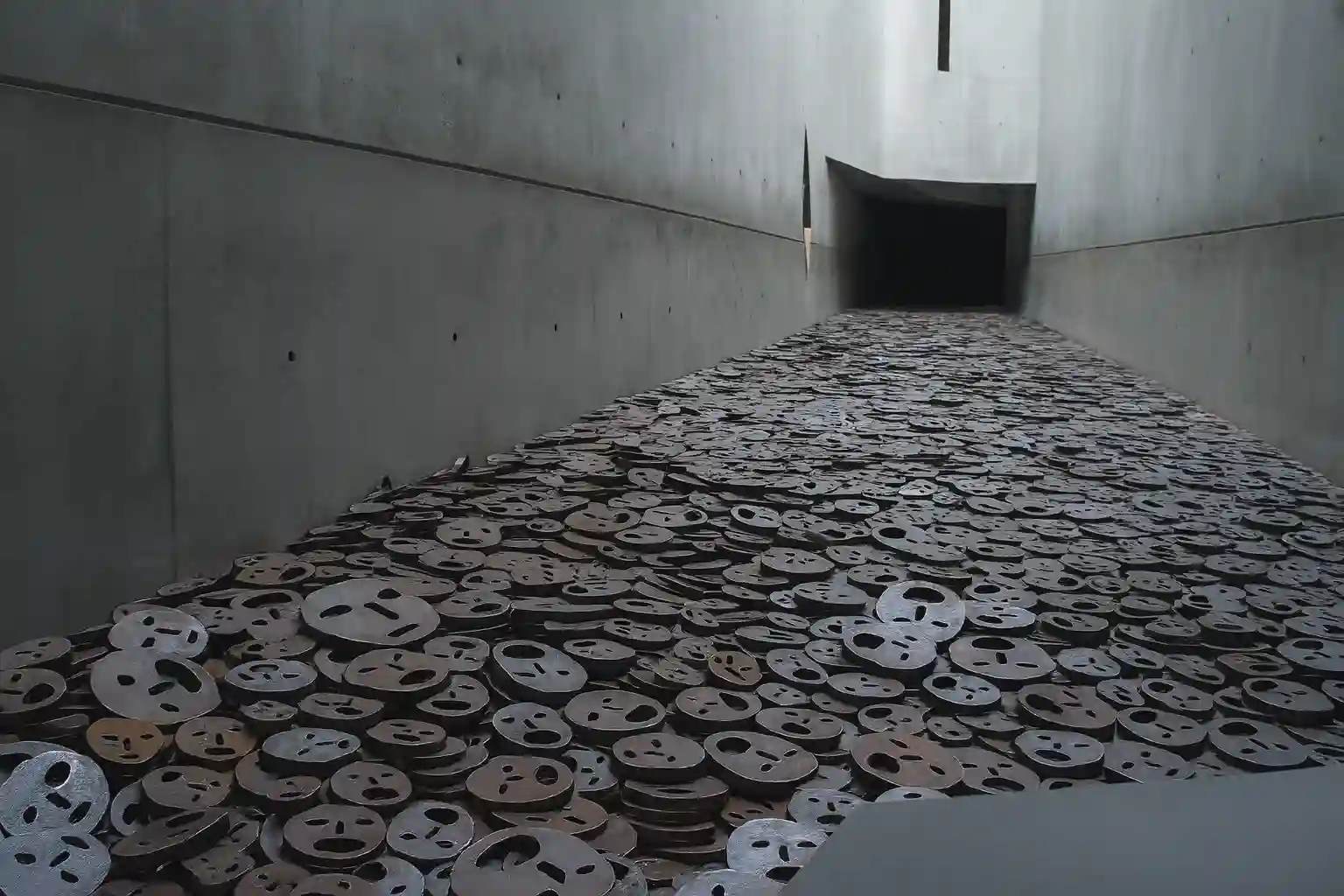
- Memory Void: A powerful floor installation with thousands of iron faces representing innocent victims of violence.
- Garden of Exile: Tilted concrete columns with olive willows create a feeling of displacement and disorientation.
- Jewish Life in Germany: The permanent exhibition presents Jewish history, religion, everyday life and cultural continuity from the Middle Ages to today.
The idea of the Jewish Museum Berlin
The Jewish Museum Berlin is not designed as a neutral container for objects. Its architecture is part of the message. Daniel Libeskind’s building uses voids, sharp angles, narrow passages, silence and disorientation to make absence physically perceptible.
The idea is simple but powerful: Jewish history in Germany cannot be told only through surviving objects and documents. It also has to confront what is missing: people, communities, traditions, voices, schools, synagogues, streets and everyday life that were interrupted or destroyed.
This is why the museum has such a strong effect on many visitors. You do not only read about history. You walk through spaces that make you feel uncertainty, loss, exile, continuity and reconstruction.
Synagogues in Berlin: what still exists and what was lost
A visit to the Jewish Museum Berlin becomes stronger if you understand that Berlin’s Jewish history is not located in one museum building. It is spread across active synagogues, restored facades, memorial sites and empty spaces where large Jewish institutions once stood.
Neue Synagoge Berlin – Centrum Judaicum
The New Synagogue on Oranienburger Straße is one of the most visible symbols of Jewish Berlin. Its restored golden dome and facade mark both survival and loss: the front section was reconstructed, while the former main prayer hall no longer exists in its original form.
Still visible Museum and memory site Oranienburger StraßeSynagogue Rykestraße
The Rykestraße Synagogue in Prenzlauer Berg is Berlin’s largest synagogue and one of the most impressive surviving synagogue buildings in the city. It shows that Jewish Berlin is not only memory, but also continuity.
Still active Prenzlauer Berg Historic buildingSynagogue Pestalozzistraße
The Pestalozzistraße Synagogue in Charlottenburg is another important address of Jewish life in Berlin. It belongs to the western Jewish geography of the city and is connected with liberal Jewish tradition.
Still active Charlottenburg Liberal traditionFraenkelufer Synagogue
The Fraenkelufer Synagogue in Kreuzberg is a meaningful stop because it stands close to the Jewish Museum Berlin. Its story connects destruction, partial survival and renewed Jewish life in the neighborhood.
Still active Kreuzberg Nearby contextFormer Fasanenstraße Synagogue
The former Fasanenstraße Synagogue in Charlottenburg was once one of Berlin’s major synagogues. It was destroyed during the Nazi period. Today, the Jewish Community Center and memorial elements mark the site.
Destroyed Memorial context CharlottenburgWhat visitors should know
Active synagogues are not normal tourist attractions. Access may be limited because of services, community life and security. Always check current visitor rules before going.
Respectful visit Check access Security rulesJewish and Israeli food in Berlin: what to try after the museum
After visiting the Jewish Museum Berlin, food can be a meaningful way to continue the route. Berlin has restaurants and cafés where Jewish, Israeli, Sephardic and New York deli traditions appear in different forms. Some are strictly kosher, others are Jewish-style or Israeli-inspired. Always check the current status before visiting.
Museum Café at the Jewish Museum Berlin
The museum café is the easiest option if you want to stay on site after the exhibition. According to the Jewish Museum Berlin, the current café offer by Shalom’chen Berlin includes vegetarian and vegan Israeli cuisine, coffee and homemade cakes.
Try: Israeli-style vegetarian dishes, vegan plates, coffee and homemade cake.
Inside the museum Vegetarian and vegan Good after visitBeth-Café
Beth-Café near Oranienburger Straße is a classic Jewish food stop connected with the Adass Jisroel community. It is a strong option if you want kosher food and a more direct Jewish Berlin context.
Try: hummus, falafel, bagels, gefilte fish with horseradish, matzo dumplings, knishes and kosher wine.
Kosher MitteFeinberg’s
Feinberg’s in Schöneberg is a well-known Israeli restaurant with Sephardic influences. It works well if you want a proper lunch or dinner after a history-focused day.
Try: shakshuka, baba ganoush, Israeli salads, grilled dishes, tahini, hummus and gefilte fish.
Israeli cuisine SchönebergMogg
Mogg is Berlin’s New York-style deli address. It is not directly beside the Jewish Museum, but it connects well with a wider Jewish Berlin route around Mitte and the former Jewish girls’ school context.
Try: pastrami sandwich, Reuben sandwich, matzah ball soup, rye bread, pickles and cheesecake.
Jewish deli style MitteL’chaim Restaurant at Chabad
L’chaim is a kosher meat restaurant connected with Chabad Berlin. It is a practical option for visitors who specifically need kosher dining.
Try: kosher meat dishes, Israeli-style plates and event catering options, depending on the current menu.
Kosher Chabad BerlinKanaan: important note
Kanaan was one of Berlin’s best-known Israeli-Palestinian food projects. The regular restaurant operated from 2015 to 2026 and is now better understood as a catering, pop-up and event story rather than a normal restaurant stop.
What it stood for: hummus, falafel, mezze and the idea that food can create dialogue.
Former restaurant Pop-ups and eventsWhat to do nearby after visiting the Jewish Museum Berlin
The area around the Jewish Museum Berlin is ideal for a half-day route. After the museum, you can continue with another memory site, a museum contrast, a canal walk or a food stop.
Memory route
Walk or take public transport toward Checkpoint Charlie and the Topography of Terror. This route connects Jewish history with Cold War history, Nazi terror and the political geography of central Berlin.
Museum route
Visit the Berlinische Galerie nearby. It creates a useful contrast: after the emotional architecture of the Jewish Museum, you move into modern art, photography and Berlin cultural history.
Kreuzberg route
Walk toward the Landwehrkanal, Hallesches Tor or Mehringplatz. This is a softer ending after an intense museum visit, with cafés, water, street life and Kreuzberg atmosphere.
- Checkpoint Charlie: Useful if you want a Cold War contrast after the museum.
- Topography of Terror: A serious continuation for visitors interested in Nazi history and state violence.
- Berlinische Galerie: Good if you want art, photography and Berlin modernity after the museum.
- Gropius Bau: A strong option for exhibitions and architecture near the former border area.
- Landwehrkanal: Best for a slower walk after an emotionally heavy visit.
Map: Jewish Museum Berlin, synagogues, restaurants and nearby stops
Use the map to understand how the Jewish Museum Berlin connects with nearby memory sites, food stops and wider Jewish Berlin.
Opening hours and ticket information
Opening hours, ticket conditions and exhibition access can change. Before visiting, check the current information with the museum or your ticket provider.
Jewish Museum Berlin: Frequently Asked Questions
Why is the Jewish Museum Berlin different from a normal museum?
The building itself is part of the experience. Daniel Libeskind’s architecture uses voids, axes, silence and disorientation to make memory and absence physically perceptible.
Which synagogues in Berlin still exist?
Important surviving or active Jewish sites include the Neue Synagoge Berlin – Centrum Judaicum, the Rykestraße Synagogue, the Pestalozzistraße Synagogue and the Fraenkelufer Synagogue. Access may be limited because these are community and worship spaces, not normal tourist attractions.
Which synagogue in Berlin was destroyed?
The former Fasanenstraße Synagogue in Charlottenburg was one of Berlin’s important synagogues and was destroyed during the Nazi period. Today, the Jewish Community Center and memorial elements mark the site.
Where can I eat Jewish or Israeli food after the museum?
Meaningful options include the museum café with Shalom’chen Berlin inside the Jewish Museum Berlin, Beth-Café for kosher Jewish and Israeli dishes, Feinberg’s for Israeli and Sephardic cuisine, and Mogg for New York-style deli classics such as pastrami and Reuben sandwiches.
What should I do after visiting the Jewish Museum Berlin?
Good nearby combinations include Checkpoint Charlie, Topography of Terror, Berlinische Galerie, Gropius Bau, or a calmer walk along the Landwehrkanal.
Source notes and useful official links
- Jewish Museum Berlin – Core Exhibition
- Jewish Museum Berlin – Libeskind Building
- Jewish Museum Berlin – Planning Your Visit and Museum Café
- New Synagogue Berlin – Centrum Judaicum
- visitBerlin – Synagogue Rykestraße
- Adass Jisroel – Beth-Café
- Feinberg’s Berlin
- Mogg Berlin
- Kanaan Berlin – current status
