
Natural History Museum Berlin – Entry Tickets & Timeless Wonders
Where Science Meets Wonder
Step inside, and you're greeted by the Brachiosaurus brancai — the tallest mounted dinosaur skeleton on the planet. Its enormous neck stretches toward the museum's glass dome, as if it still searches for sunlight after 150 million years. Around it, the air feels different — quieter, heavier with time.
Children stare upward in awe, while adults rediscover a childlike sense of wonder. That's the magic of Berlin's Natural History Museum: it reminds you that science and imagination aren't opposites, but partners. Founded in 1810, it's one of Europe's oldest natural history institutions and still an active research center today. Over 30 million specimens tell the story of life — from its first spark to the diversity of forms that exist now.
A Museum with a Living Spirit
Unlike many museums, this one never feels static. Behind its exhibits, hundreds of scientists continue to study fossils, genes, and galaxies. You're not just looking at the past — you're standing inside a working laboratory of evolution and time.
The museum is famous for its Wet Collection, a surreal and beautiful archive of life: fish, reptiles, insects, and plants preserved in thousands of glass jars, their golden hues glowing under soft light. It's both eerie and poetic — a reminder that even death can tell stories of life.
Then there's Tristan Otto, one of the world's best-preserved Tyrannosaurus rex skeletons. You stand face-to-face with a predator that ruled the Earth for millions of years — and you feel it. Its bones are dark, almost metallic, illuminated in a way that feels theatrical yet intimate.
Key Highlights You Shouldn't Miss
- The Brachiosaurus Hall – At 13 meters tall, the centerpiece of the museum. Light from the roof windows gives the skeleton a cathedral-like aura — both monumental and fragile.
- Tristan Otto – The Tyrant King – One of the few original T. rex skeletons on display outside North America. Its jaw alone conveys power; its story, the fragility of life.
- The Wet Collection – Millions of preserved organisms — silent yet mesmerizing. Scientists still use these specimens for DNA and ecological studies.
- Darwin's Evolution Chamber – An immersive digital journey through the development of species — a modern tribute to the science that changed how we see ourselves.
- The Meteorite Gallery – Fragments from space, older than Earth itself. Here, time becomes abstract — billions of years condensed into stone.
What's Included with Your Entry Ticket
Your ticket to the Museum für Naturkunde includes full access to all permanent exhibitions and galleries. You'll explore the Main Exhibition Hall with the Brachiosaurus, Diplodocus, and T. rex Tristan Otto, the Evolution in Action gallery with interactive displays, the Cosmos Gallery featuring meteorites and moon rocks, and the Biodiversity Wall showcasing species from land, air, and sea.
Audio guides are available in multiple languages for adults and children. Combined tickets with the Pergamonmuseum or Science Center Spectrum are also offered. Booking online allows you to skip the queue and guarantees timed entry — a small but welcome comfort in Berlin's busy museum district.
The Architecture – A Temple of Knowledge
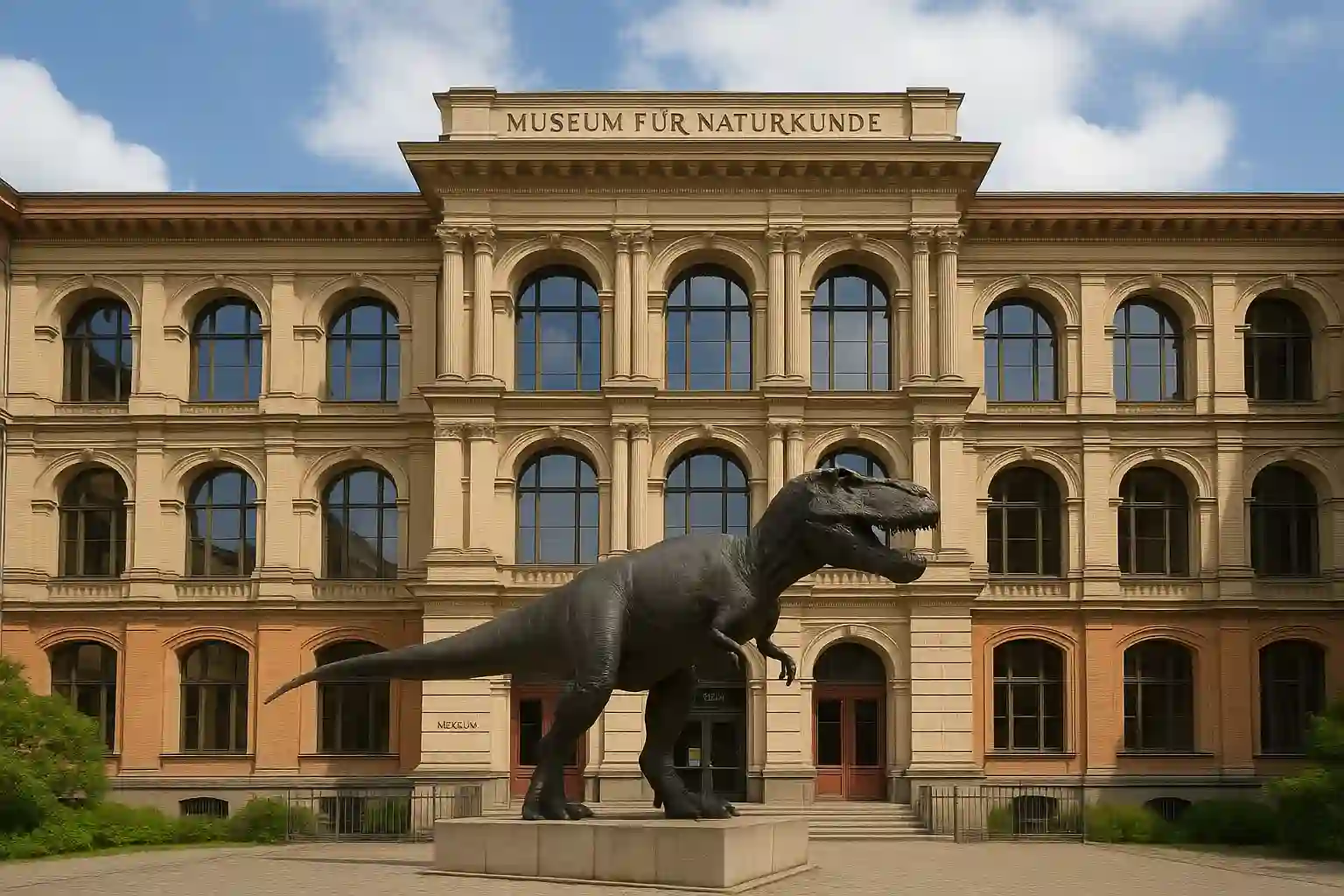
The museum's 19th-century architecture feels like a dialogue between science and art. Tall arched windows flood the halls with daylight; stone, glass, and metal form an elegant frame for the exhibits. After the destruction of World War II, the building was rebuilt with care. Its scars remain — and that's part of its beauty.
The mix of classical structure and modern installations reflects Berlin's identity: a city that never hides its past but turns it into strength. Walking through its corridors feels like moving through a cathedral — not of faith, but of knowledge.
Practical Information
Opening Hours:
- Tuesday – Friday: 9:30 a.m. – 6 p.m.
- Saturday – Sunday: 10 a.m. – 6 p.m.
- Closed Mondays
Address: Museum für Naturkunde, Invalidenstraße 43, 10115 Berlin
Getting There:
- U-Bahn: U6 to Naturkundemuseum
- Tram: M5, M8, M10
- S-Bahn: Nordbahnhof (10-minute walk)
Duration: Plan for 1.5 to 2.5 hours — or longer if visiting with children
Accessibility: Fully wheelchair-accessible with elevators and tactile guidance systems
Facilities: Museum café, gift shop, lockers, and rest areas
Tips for Your Visit
- Visit early or late in the day for a quieter, more contemplative experience
- Perfect for rainy days — the atmosphere inside is peaceful and meditative
- Don't miss the small outdoor dinosaur garden near the entrance
- Bring a small guidebook or use the audio guide to interpret inscriptions and scientific details
- Photography is allowed without flash; tripods are prohibited inside
Combine Your Visit
After your visit, explore the Berlin Wall Memorial at Bernauer Straße, just a short walk away — another place where history feels close and real. The Humboldt University is also nearby, with its historical links to the museum's early research. Or simply cross to Invalidenpark for a quiet break by the fountains before heading to the Spree.
The museum sits at a crossroads of science, memory, and city life — the perfect symbol of Berlin itself.
Why You'll Love It
Because it's not just about bones and stones. It's about perspective — how small we are, how far we've come, and how much there's still to learn. It's a place where curiosity feels sacred and where silence tells stories louder than words.
Berlin has many museums, but only here do you feel time stretching in every direction — from the prehistoric to the cosmic. You hear the footsteps of school kids, the whispers of couples, the click of a camera — and then you look up at the Brachiosaurus, and everything else fades.
Frequently Asked Questions
How much does entry to the Natural History Museum cost?
How long should I plan to spend at the museum?
What is the most famous exhibit?
Is the museum suitable for children?
Can I take photos inside the museum?
Is the Natural History Museum accessible for wheelchair users?
