
Berlin-Zehlendorf – Lakes, Villas, and the Quiet Soul of the Southwest
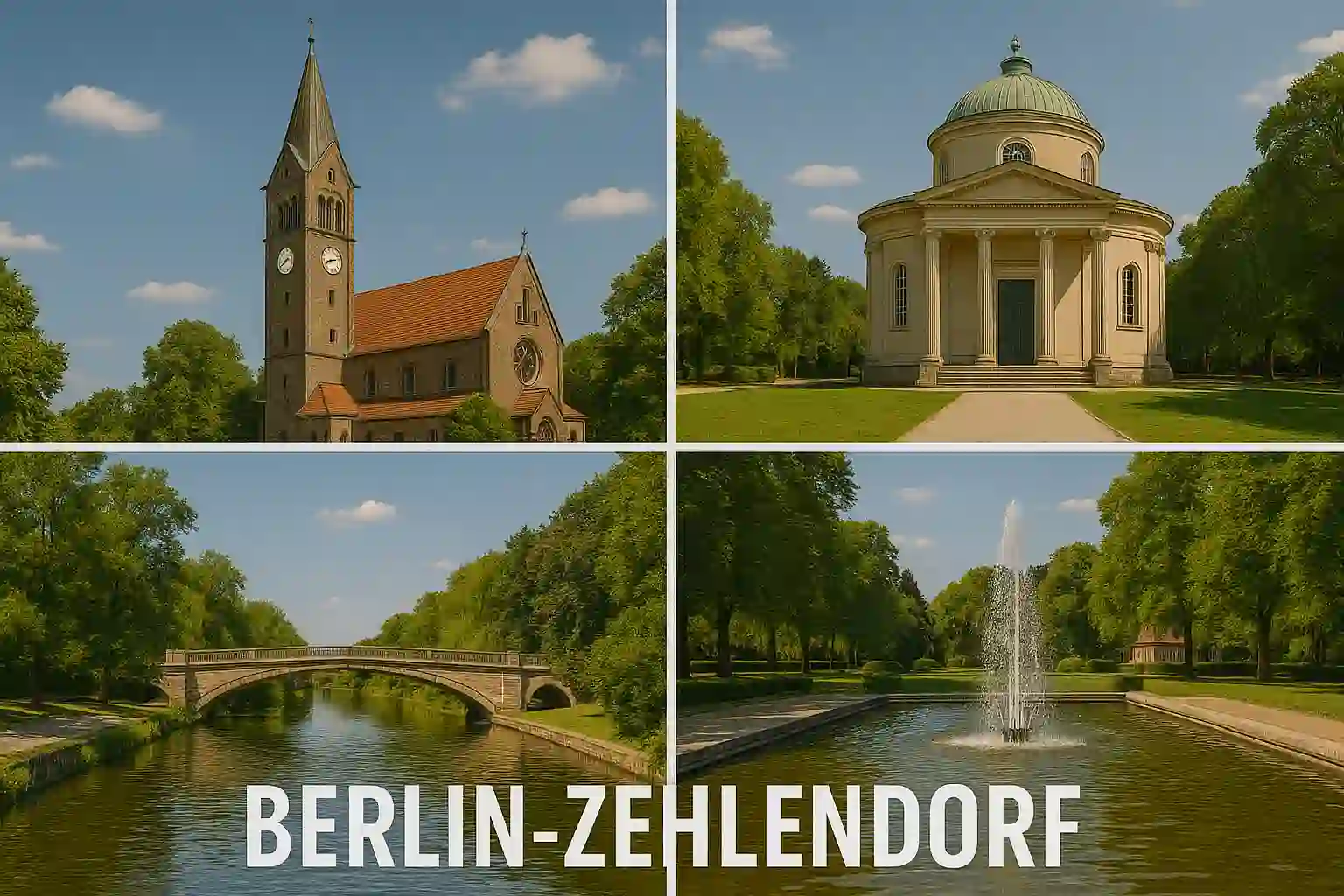
Between City and Countryside
Zehlendorf belongs to the district of Steglitz-Zehlendorf, a wide stretch of southern Berlin bordering the state of Brandenburg and the royal parks of Potsdam. It's a place that blends urban sophistication with rural calm — families cycling to the lake, students from the Free University chatting in cafés, and joggers disappearing into the Grunewald forest.
What makes Zehlendorf special is its variety. In one afternoon you can swim in a lake, visit a world-class museum, and end the day with dinner in a garden café. It's the Berlin of balance and breathing space.
Schlachtensee – Reflections of Peace
Among Berlin's many lakes, Schlachtensee stands out for its clarity and serenity. Surrounded by pine forest and accessible by the S-Bahn of the same name, it forms a natural oasis between the city and the woods.
A 5.5-kilometre walking path circles the lake, perfect for joggers, strollers, and anyone seeking stillness. Early mornings are magical — mist drifting over the water, only the sound of birds and the rhythmic steps of locals on their daily run. In summer, swimmers slide into the cool, clean water from small sandy coves.
Personal recommendation: Stop at the historic Fischerhütte am Schlachtensee, a lakeside restaurant that has welcomed guests since the 18th century. With a beer in hand and the sun setting over the water, it's easy to forget you're still in Berlin.
Krumme Lanke – The Smaller, Wilder Twin
Just a short forest walk away lies Krumme Lanke, Schlachtensee's little brother. Slightly smaller and wilder in shape, it has long been a favourite among Berliners who prefer quiet corners.
In the 19th century, city dwellers came here for weekend picnics and boat rides; today, the atmosphere hasn't changed much. Wooden piers invite swimmers, and benches under old oaks make it ideal for reflection. The nearby U-Bahn station Krumme Lanke, end of the U3 line, is a charming relic of 1920s architecture and the perfect gateway for a day trip into nature.
The Museumsdorf Düppel – Medieval Life Reimagined
Tucked between forest paths and modern suburbs, the Museumsdorf Düppel is one of Berlin's most surprising sights. This open-air museum reconstructs a 13th-century village on its original archaeological site — complete with wooden houses, workshops, and grazing sheep.
Visitors can watch craftsmen at work, bake bread in clay ovens, and learn how medieval farmers lived in the Berlin region centuries ago. It's a hands-on experience that fascinates children and adults alike — a vivid reminder that history is not just read, but lived.
Tip for families: The museum runs special workshops during weekends where children can try pottery, weaving, and medieval cooking. Check their calendar before visiting.
The Botanical Garden – A World Under Glass
Few urban spaces feel as global and serene as the Botanical Garden Berlin, technically in the Dahlem area of Zehlendorf. Founded in 1899, it is one of Europe's largest and most scientific gardens, home to over 20,000 plant species from every climate on Earth.
The highlight is the Great Tropical House, a monumental glass cathedral filled with palms, orchids, and cascading vines. Walking through its humid air feels like entering another continent. Outside, themed gardens present alpine flora, medicinal herbs, and Japanese landscapes.
Linked to the Botanical Museum, the garden is both research centre and refuge — a place where nature meets knowledge, perfectly capturing Berlin's spirit of curiosity.
AlliiertenMuseum – Stories of the Cold War
Zehlendorf also holds the memory of divided Berlin. The AlliiertenMuseum (Allied Museum) documents the presence of American, British, and French forces from 1945 to 1994 — decades that shaped the city's identity.
Housed in former U.S. military buildings in Dahlem, the museum features a restored "Rosinenbomber" — the aircraft used during the Berlin Airlift — and personal objects from soldiers and residents. Exhibits show daily life in a city that lived under constant tension yet remained open to the world.
It's not a grand museum, but one filled with human stories — a bridge between political history and personal memory.
Domäne Dahlem – Farming in the City
Across the street lies another Zehlendorf gem: the Domäne Dahlem, a historic manor farm that brings agriculture into the urban landscape. Once the food supplier of royal households, today it functions as an organic farm and museum, with fields, animals, and a popular weekend market.
Families come to pick apples, buy fresh bread, or simply wander through the barns. Inside the exhibition rooms, visitors learn how food production shaped Berlin's growth over the centuries. It's a place that combines sustainability, education, and a touch of countryside charm — rare qualities in a metropolis.
Freie Universität Berlin – Knowledge and Freedom
Founded in 1948 as a response to political control in East Berlin, the Freie Universität Berlin (FU) embodies the city's democratic and intellectual spirit. Its name — "Free University" — was both declaration and hope.
The campus in Dahlem blends history and modern design: the Henry Ford Building recalls 1950s optimism, while the futuristic Philological Library, designed by Norman Foster, glows like a glass brain at night. For visitors, walking among students and sculptures gives a sense of Berlin's other strength — ideas.
Wannsee – Beauty and Shadows
Technically part of Steglitz-Zehlendorf, Wannsee is inseparable from the district's identity. Its wide waters and wooded banks make it one of Berlin's most beloved recreation areas.
At the Strandbad Wannsee, Europe's largest inland beach, thousands gather on summer days to swim and sunbathe — a Berlin tradition since 1907.
A place of remembrance: A few minutes away stands the Haus der Wannsee-Konferenz, a villa whose elegant façade hides one of the darkest chapters of history. Here, in 1942, Nazi officials planned the logistics of the Holocaust. The house is now a powerful memorial and documentation centre, confronting visitors with the weight of remembrance.
Nearby, the Liebermann Villa, former home of painter Max Liebermann, offers a gentler perspective: art, light, and lakeside gardens that celebrate peace and creativity.
Nikolassee and the Villa Heritage
Zehlendorf's residential charm culminates in Nikolassee, a neighbourhood of quiet streets and stately homes. Built around 1900 as a garden suburb, it reflects the ideals of the reform movement: light, space, and closeness to nature.
Stroll past ivy-covered villas and half-timbered houses, many designed by Berlin's leading architects of the early 20th century. The small Nikolassee Station, with its steep-roofed design, looks more like a mountain chalet than a city platform.
For architecture lovers, it's a living open-air museum — elegant without extravagance, cultured without pretense.
Culinary Moments and Local Life
Zehlendorf's rhythm is slower, its pleasures simpler. Brunch at Café Neunauge near the Free University, homemade cakes at Café Fischerhütte, or regional dishes in traditional restaurants like Alte Fritz Zehlendorf all reflect the area's cozy refinement.
Weekly markets in Dahlem or Zehlendorf Mitte showcase local honey, organic vegetables, and Berlin-Brandenburg wines. Here, food connects with place — honest, regional, seasonal.
Architecture, Culture, and Nature in Harmony
What unites Zehlendorf's highlights is balance. Its architecture tells of prosperity, its gardens of patience, its museums of reflection. Unlike central Berlin, which shouts with energy, Zehlendorf whispers with elegance.
A walk here can pass through centuries: medieval Düppel, Prussian villas, Cold War relics, and modern glass libraries — each layer intact and respected. It's the story of a city learning to live with its past while cultivating beauty in the present.
Practical Tips for Visitors
How to get there:
S-Bahn lines S1 and S7 connect Zehlendorf and Wannsee with the city centre. The U3 line reaches Dahlem and Krumme Lanke. Journey time from Alexanderplatz is approximately 35-45 minutes.
When to go:
Late spring to early autumn offers the best weather for lakes and parks. Summer is perfect for swimming, while spring and autumn provide stunning forest colors.
Combine with:
A day trip to Potsdam, just 15 minutes away by train from Wannsee. The combination of Zehlendorf's nature and Potsdam's palaces makes for a perfect day.
Local vibe:
Quiet, cultured, family-friendly. Don't rush — Zehlendorf rewards slow discovery. Bring a book, pack a picnic, and let the district reveal itself gradually.
Final Thoughts – The Quiet Intelligence of the Southwest
Berlin-Zehlendorf doesn't try to impress; it invites. It's where the city breathes — in the rustle of Grunewald trees, the laughter at Wannsee, the silence of museum halls, and the clinking of cups in Dahlem cafés.
To understand Berlin's full character, you need to see this side too: the thoughtful, green, and graceful Berlin, where history and harmony walk hand in hand.
Whether you're seeking nature, culture, or simply a slower pace, Zehlendorf offers what the city centre often cannot — space to think, breathe, and remember why you came to Berlin in the first place.
