
Teufelsberg Berlin – Listening Station & Street Art
Cold War radar domes, panoramic forest views, and one of Berlin's most iconic urban art sites in the Grunewald.
Climb the rubble hill of Teufelsberg to explore the former NSA listening station: eerie geodesic domes, vast murals, and a unique mix of history and creativity. This abandoned spy facility has transformed into one of Berlin's most atmospheric destinations, where Cold War intrigue meets contemporary street art in an unforgettable forest setting.
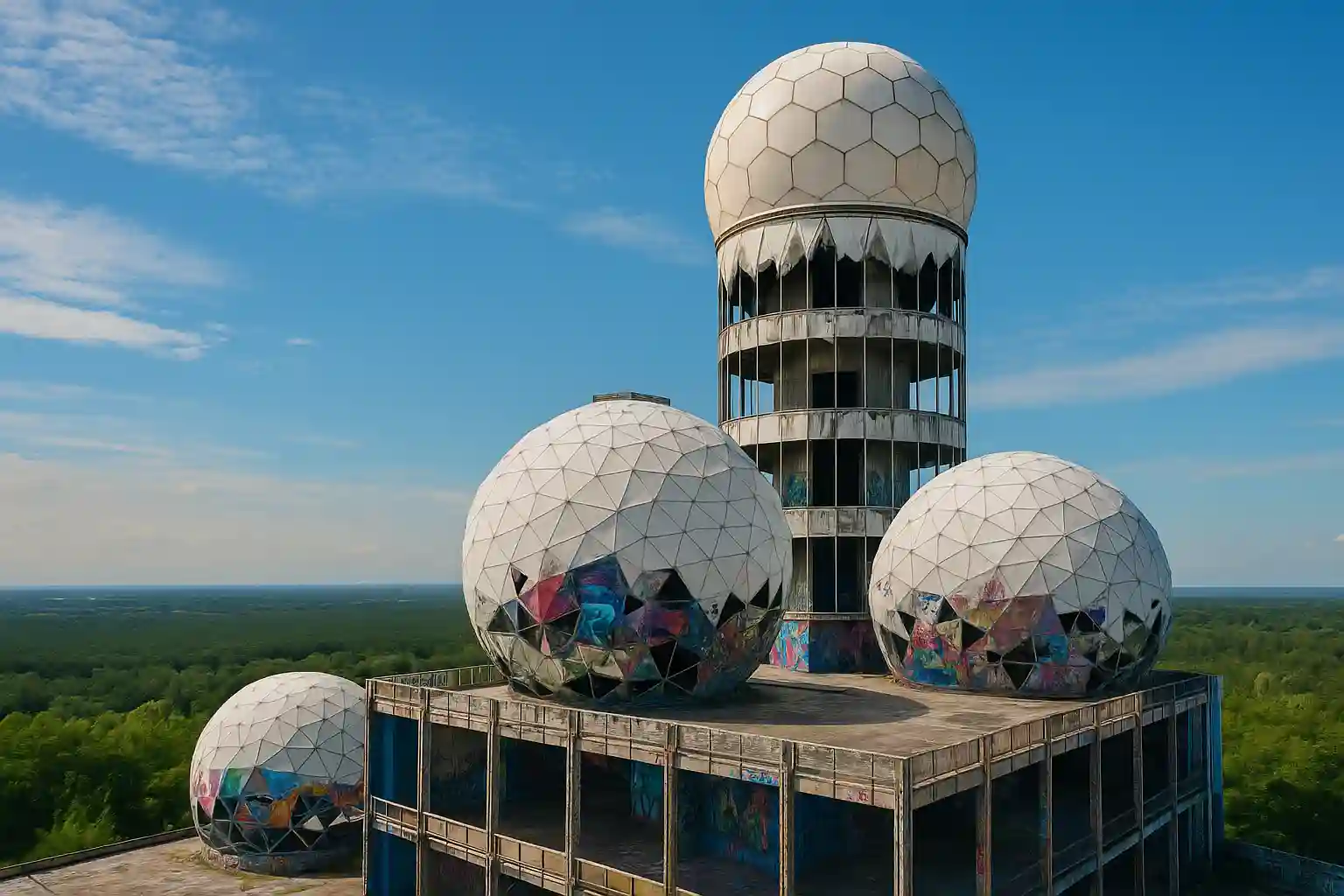
Teufelsberg at a Glance
A man-made hill in the Grunewald built from WWII rubble, topped by a former US/NSA listening station — today a canvas for world-class street art and one of Berlin's most unique attractions.
Atmosphere
Surreal, photogenic, and a bit post-apocalyptic — radar domes, wind in the trees, and sweeping views over Berlin. The juxtaposition of Cold War architecture and vibrant graffiti creates an otherworldly experience that feels both haunting and inspiring.
Expect to spend 1.5–3 hours exploring the complex, photographing murals, and taking in the panoramic views from the rooftop platforms.
Where it fits
Located in the western Grunewald forest, Teufelsberg is perfect for combining urban exploration with nature. It pairs beautifully with a forest hike, a visit to Teufelssee lake, or a picnic in the surrounding woods.
Part of our Berlin explorations. See all Neighborhood & Area Guides and browse City Tours.
The History Behind the Hill
From Nazi military academy to Cold War spy station — Teufelsberg's story is as layered as its construction.
Built on Ruins
Teufelsberg — literally "Devil's Mountain" — is an artificial hill constructed from approximately 26 million cubic meters of rubble from destroyed Berlin buildings after World War II. Beneath the rubble lies the never-completed Nazi military-technical college designed by Albert Speer. The structure proved impossible to demolish with available explosives, so it was simply buried and transformed into what would become West Berlin's highest point at 120 meters.
Cold War Listening Post
During the Cold War, American and British intelligence services recognized Teufelsberg's strategic potential. Its elevation made it ideal for intercepting radio communications from East Germany and beyond. Beginning in the 1960s, the US National Security Agency (NSA) built a sophisticated listening station on the summit, complete with the iconic geodesic radomes that still define the site today.
At its peak, hundreds of personnel worked here around the clock, eavesdropping on Eastern Bloc military and diplomatic communications. The facility was part of the global ECHELON surveillance network and played a crucial role in Western intelligence gathering throughout the Cold War.
Abandonment and Rebirth
After German reunification in 1990, the listening station was decommissioned and abandoned. For years, the site sat empty — a slowly decaying monument to Cold War paranoia. Then, in the 2000s, street artists discovered the abandoned complex and began transforming it into an unofficial open-air gallery. Today, Teufelsberg is recognized as one of Europe's premier street art destinations, where layers of graffiti tell new stories on top of old Cold War secrets.
Top Highlights
What to look for when you're exploring the complex.
Radar Domes
The geodesic "golf balls" that defined Cold War signals intelligence. Climb inside to experience the unique acoustics — whispers carry across the entire dome, creating eerie echoes that add to the surreal atmosphere. The largest dome offers the best sound experiments and photo opportunities.
Street Art Halls
Ever-changing murals by international artists across the complex. From massive portraits to abstract pieces and political statements, the art constantly evolves. Some walls have been painted dozens of times, creating a living gallery that never looks the same twice. Look for works in the main buildings, stairwells, and along the rooftop corridors.
Rooftop Views
360° panoramas over the Grunewald forest and Berlin's skyline. On clear days, you can spot the TV Tower, Olympic Stadium, and even the distant outlines of Brandenburg. The exposed position means strong winds — bring a jacket even in summer — but the views are absolutely worth it, especially at sunset.
The Tunnels & Basements
Venture into the darker corners of the complex to discover underground passages, equipment rooms still bearing English signage, and graffiti-covered bunker spaces. These areas offer a more claustrophobic, intense experience — and some of the most interesting street art pieces away from the main tourist flow.
Street Art & Photography
What makes Teufelsberg a paradise for photographers and urban art lovers.
The Art Scene
Teufelsberg has become a pilgrimage site for street artists from around the world. The constantly evolving murals range from photorealistic portraits to abstract geometric pieces and bold political statements. Some artists return year after year, creating new layers over their own previous work.
Notable styles include large-scale character work on the exterior walls, intricate stencil pieces in the corridors, and experimental abstract pieces inside the domes. The juxtaposition of colorful contemporary art against brutalist Cold War architecture creates an aesthetic that's entirely unique.
Photography Tips
The best light hits the main building faces in late afternoon, creating dramatic shadows and making colors pop. Inside the domes, shoot during midday when light streams through the latticed structure. Bring a wide-angle lens to capture the scale of murals and the dome interiors.
For Instagram-worthy shots, focus on: the silhouette of the domes against sunset, close-ups of the most vibrant street art, the view from the rooftop looking down into the forest, and the contrast between decaying architecture and fresh paint. Respect the art and other visitors when setting up shots.
Hike & Access
Getting there involves a forest walk through the Grunewald — part of the adventure and a beautiful prelude to the main event.
The Approach
From S-Bahn Heerstraße or Grunewald, follow clearly marked trails through mixed pine and deciduous forest (30–45 minutes walking). The path is well-maintained but includes some elevation gain — wear sturdy shoes with good grip, especially after rain when the trail can be muddy.
The forest walk itself is lovely, offering a peaceful transition from urban Berlin into this unique site. In spring and summer, the canopy provides welcome shade; in autumn, the fallen leaves create a golden carpet beneath your feet.
Teufelssee Detour
Consider extending your hike with a detour to Teufelssee, a small forest lake just below the main hill. This natural swimming spot is popular with locals in summer and offers a serene place to rest before or after exploring the listening station. The lake loop adds about 15–20 minutes to your walk but provides a completely different atmosphere — quiet water reflecting trees versus the stark architecture above.
Best Time to Visit
Timing your visit can dramatically enhance the experience.
Seasonal Considerations
Spring (April–May): Fresh greenery in the forest, comfortable temperatures, and fewer crowds. The site feels reborn after winter.
Summer (June–August): Peak season with the best weather but more visitors. Consider early morning or late afternoon visits. Combine with a swim at Teufelssee.
Autumn (September–October): Stunning forest colors on the approach, dramatic skies for photography, and thinning crowds. Often the most atmospheric time to visit.
Winter (November–March): Starkest, most post-apocalyptic feel. Fewer visitors and unique photo opportunities, but dress warmly — it's exposed and windy on top.
Time of Day
Morning: Quietest period, best for avoiding crowds and having the domes to yourself for sound experiments. Soft light works well for interior photography.
Midday: Brightest light inside the domes, good for seeing all details of street art. Can be crowded during peak season.
Late Afternoon/Sunset: Prime time for exterior photography, golden hour light on murals, spectacular sunset views over Berlin. Most atmospheric but also busiest time. Book sunset tours in advance.
Guided Tours
Professional tours provide historical context, safe access, and insights you'd miss exploring alone.
Teufelsberg Guided Tour
Visit the listening station with transfer and expert insights into Cold War espionage, the site's transformation into an art gallery, and access to restricted areas. Guides share firsthand accounts and details about the surveillance operations that once took place here — book here.
Tours typically last 2–3 hours including transport and cover the main buildings, domes, and rooftop areas. Some tours offer sunset timing for premium views.
More Berlin Experiences
Pair Teufelsberg with other Cold War sites like the Berlin Wall Memorial, Checkpoint Charlie, or the Stasi Museum for a comprehensive look at divided Berlin. Or contrast the urban exploration with traditional sightseeing — explore our curated City Tours or browse all areas to plan your perfect Berlin itinerary.
Practical Info
Everything you need to plan a smooth visit to Teufelsberg.
| Topic | Details | Notes |
|---|---|---|
| Location | Teufelsberg, Grunewald Forest (Charlottenburg-Wilmersdorf) | Western Berlin, 120m elevation |
| Getting there | S-Bahn Heerstraße / Grunewald + forest walk (30–45 min) | Bus 218 gets you closer; tours often include transport |
| Access | Guided tours recommended; paid entry for site access | Independent access limited; check current rules |
| Duration | Allow 1.5–3 hours for the site + 1 hour for forest walks | Longer for photography or sunset visits |
| What to bring | Sturdy shoes, water, windbreaker, camera, fully charged phone | Exposed hilltop, uneven surfaces, limited facilities |
| Tours | Teufelsberg Tour | 2–3 hours, includes transfer & guide |
| Nearby | Teufelssee lake, Grunewald forest trails, Olympic Stadium area | Easy to combine for a full day outdoors |
| More Berlin | Neighborhood & Area Guides | Plan additional stops across the city |
Ready for Teufelsberg?
Book a guided visit to the listening station for expert insights, safe access, and unforgettable views — or hike up independently for street art and panoramic Berlin vistas.
Book the Teufelsberg Tour