
Best Highlights in Berlin Tempelhof – History, Space and Urban Freedom
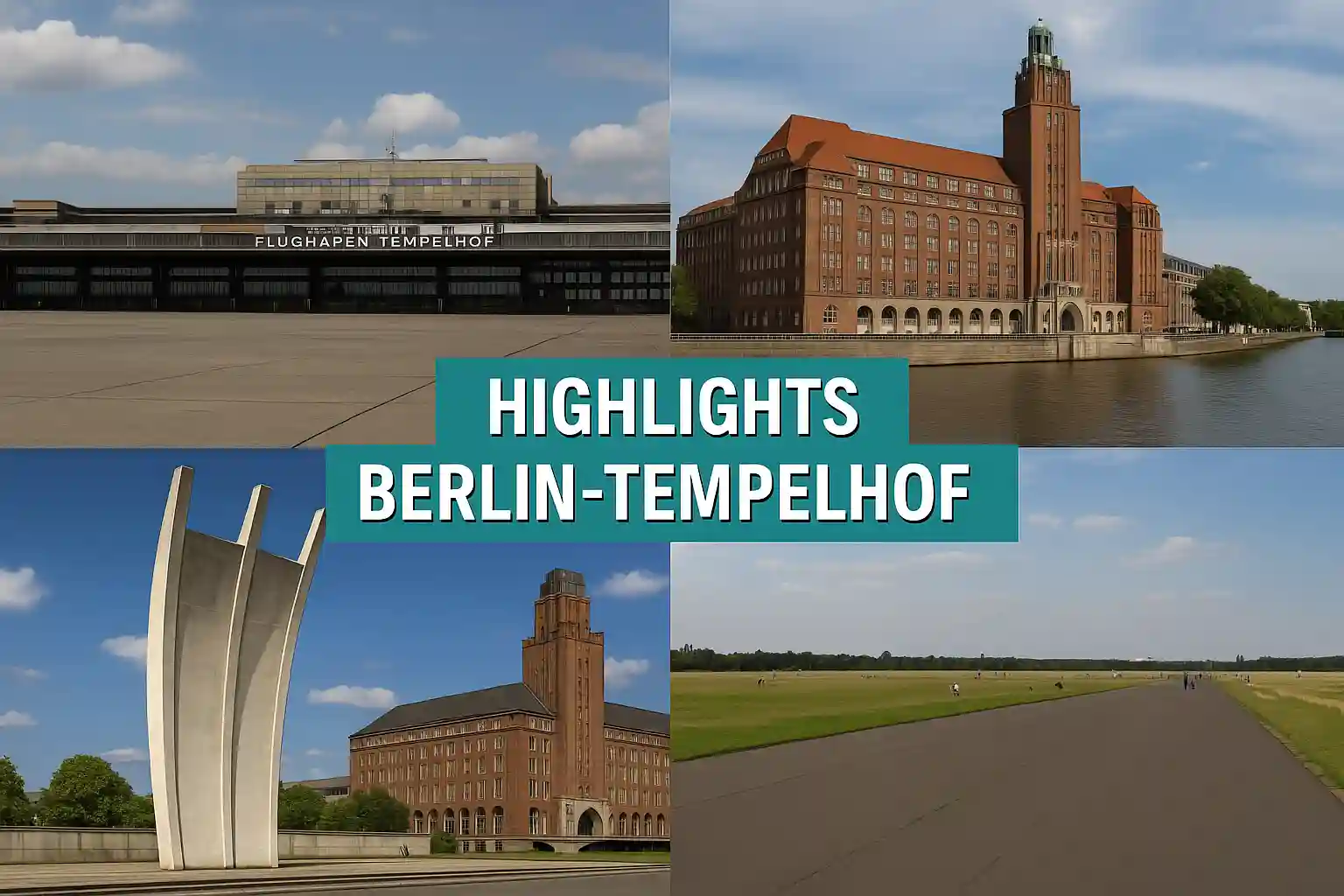
Tempelhofer Feld – Berlin's Biggest Urban Open Space
Tempelhofer Feld is the unmistakable heart of the district. Once a functioning airport and now one of the largest urban parks in Europe, the field is an enormous open space where locals and visitors spread out across former runways, grassy areas and long cycling paths. The feeling of standing on a wide runway in the middle of a capital city is unforgettable.
Travellers come here to bike, skate, jog, fly kites, picnic or simply sit in the grass and enjoy the sky. The sunsets on Tempelhofer Feld are among the best in Berlin, with warm colours stretching across the empty horizon. The atmosphere changes throughout the day: quiet in the mornings, lively in the afternoons, peaceful again as evening arrives.
The park reflects a special part of Berlin's identity: freedom, openness and the ability to transform old structures into places of community life.
Tempelhof Airport Building – Architecture and Hidden History
Beside the vast field stands the Tempelhof Airport building, one of the most monumental architectural structures in Europe. Completed in the 1940s and extended during the Cold War, it is an impressive example of 20th-century architecture, both in scale and design.
Today, the building is no longer used for flights, but guided tours reveal the history hidden inside: underground bunkers, old departure halls, hangars, and rooftop spaces. Visitors learn about the airport's role during the Berlin Airlift, its Cold War function and the stories of the people who worked here.
The sheer size of the building leaves a strong impression. Walking along its long corridors feels like stepping into another era of Berlin's complex history. Architecture lovers, history enthusiasts and curious travellers often consider this one of the best experiences in the south of the city.
Luftbrückendenkmal – The Berlin Airlift Monument
Close to the airport stands the Luftbrückendenkmal, the Berlin Airlift Monument. It commemorates one of the most important humanitarian operations of the 20th century: the 1948/49 airlift that kept West Berlin supplied when the Soviet Union blocked all land routes.
The monument, shaped like three rising arcs, symbolizes the flight corridors used during the operation. For travellers interested in Berlin's divided past, it is a powerful reminder of solidarity, courage and resilience. Standing in front of the monument, you can feel the historical weight of the events that shaped the city's post-war identity.
Volkspark Mariendorf – A Calm, Green South-Side Park
Further south lies Volkspark Mariendorf, one of the district's most relaxing green spaces. The park combines forest-like paths, small lakes, open lawns and quiet corners that make it ideal for a peaceful afternoon.
Lake Mellensee, in the centre of the park, creates a soft, reflective atmosphere. In spring, cherry blossoms brighten the paths; in summer, families gather around the lawns; autumn brings warm colours to the trees. Volkspark Mariendorf is not as famous as some other parks in Berlin, which makes it a great spot for travellers who enjoy calm surroundings.
Alter Tempelhofer Park – A Local Favourite
Smaller and more intimate than Tempelhofer Feld, Alter Tempelhofer Park feels like a true neighbourhood green space. With old trees, playgrounds and walking paths, it offers a different side of Tempelhof: cosy, quiet and local.
People come here to relax, read, or walk their dogs. Though simple, the park reflects how Berliners live: green pockets in the middle of the city, used daily and appreciated for their simplicity. For travellers walking between Alt-Tempelhof and nearby areas, this is a pleasant, peaceful stop.
Tempelhof Cultural Centres and Local Community Life
Tempelhof is rich in small cultural spaces that reflect the district's community spirit. Local theatres, cultural centres and neighbourhood halls host readings, exhibitions, concerts and workshops. Instead of large-scale attractions, Tempelhof offers small, authentic places where visitors can get a sense of everyday culture.
This local identity is one of the district's most charming qualities. Walking through residential streets, travellers often find murals, independent cafés, small galleries and corners that feel lived-in and welcoming. It's a district that rewards slow exploration.
Ullsteinhaus – Industrial Heritage by the Water
Along the Teltow Canal stands Ullsteinhaus, an architectural landmark built in the early 20th century. The building once housed one of Germany's largest printing operations and remains an impressive example of historic industrial design.
With its tall tower, brick façade and canal-side location, Ullsteinhaus is a favourite spot for photographers. Today, it hosts offices and creative spaces, but the historical character remains intact. A walk along the canal, especially at sunset, is one of the most relaxing ways to explore southern Tempelhof.
Tempelhofer Hafen – Restaurants, Water Views and Modern Style
A short walk from Ullsteinhaus leads to Tempelhofer Hafen, a modern riverside shopping area with cafés, small restaurants and terraces overlooking the canal. It combines historic harbour structures with new architecture, creating a balanced mix of old and modern Berlin.
Travellers enjoy the waterside atmosphere here: quiet mornings, gentle reflections on the canal, and evening spots perfect for a relaxed dinner. Tempelhofer Hafen is not overly crowded, making it a comfortable, easy alternative to Berlin's central restaurant hubs.
Bergstraße and the Old Village of Tempelhof
Bergstraße, located near the U-Bahn station Alt-Tempelhof, forms the historic core of the district. This area still preserves the structure of the old Tempelhof village, with narrow streets, traditional houses and a calm local rhythm.
It's one of the best places to experience the district's older charm. Travellers who enjoy exploring beyond the typical sights will find this small area full of character. The church, old houses and quiet lanes show what Tempelhof looked like before the city expanded around it.
Local Food and Coffee Spots
Tempelhof's food culture reflects its neighbourhood character: down-to-earth restaurants, Balkan cuisine, German classics and cosy cafés hidden in side streets. Around Tempelhofer Hafen, visitors find modern eateries, while Alt-Tempelhof and Mariendorf offer more traditional spots.
Local favorites worth trying:
- Café Tante Lisbeth – Cozy neighborhood café with homemade cakes and excellent breakfast options near Tempelhofer Damm
- Balkan Grill Walter – Authentic Balkan cuisine in a family-run restaurant, known for generous portions and warm atmosphere
- Tempelhofer Berg – Modern bistro with seasonal German dishes and a lovely terrace overlooking the canal
- Café Kiezkind – Perfect for slow mornings with quality coffee, fresh pastries, and a relaxed local vibe
Cafés here are notably relaxed — ideal for reading, working or simply watching local life. For travellers who enjoy exploring less touristy food districts, Tempelhof offers an honest, authentic atmosphere.
How to Get There and Practical Tips
Getting There:
Tempelhof is easy to reach via the U6, which connects the district directly to the centre of Berlin. Several bus lines cover the rest of the area, making it simple to move between Tempelhofer Feld, Ullsteinhaus, Mariendorf and other neighbourhoods. Main stations include Tempelhof, Paradestraße, and Alt-Tempelhof.
Best Time to Visit:
Spring, summer and early autumn are ideal when the parks and canal paths are at their most beautiful. In winter, travellers can enjoy guided tours inside Tempelhof Airport (booking required), warm cafés and quiet walks across the field. Sunsets year-round are spectacular on Tempelhofer Feld.
Airport Tours:
Book Tempelhof Airport tours in advance, especially during peak tourist season. Tours typically run on weekends and last about 90 minutes. Check the official website for current schedules and availability.
Local Vibe:
Tempelhof is generally safe and comfortable, with a strong local feel. Good walking shoes and a bit of time for open-air exploring are all you need to enjoy the district fully. Bring a picnic blanket for Tempelhofer Feld on sunny days.
Why Tempelhof Is Worth a Visit
Tempelhof offers a special mix of history, green space and community life. Standing on Tempelhofer Feld, walking through the old village core, exploring parks or discovering industrial architecture — every part of the district has its own character.
For travellers looking for open horizons, local culture and less touristy neighbourhoods, Tempelhof is one of the most rewarding areas of Berlin. It's a district that feels honest, spacious and connected to the city's past, yet full of life in the present.
Frequently Asked Questions
What is Tempelhofer Feld and why is it special?
Can you visit inside Tempelhof Airport?
How do I get to Tempelhof from central Berlin?
When is the best time to visit Tempelhof?
What else can I do in Tempelhof besides the field?
Is Tempelhof family-friendly?
I am raw html block.
Click edit button to change this html
