
Berlin-Pankow – Hidden Highlights and Cultural Charm in the North
A District of Contrasts and Character
Pankow today is not just one neighborhood. Since Berlin's administrative reform in 2001, the district has combined three former boroughs — Pankow, Prenzlauer Berg, and Weißensee — into a single large and diverse area. Each of them has its own identity: the tranquil and leafy streets of Pankow proper, the vibrant cafés and boutiques of Prenzlauer Berg, and the artistic calm of Weißensee.
Together, they form one of Berlin's most desirable living areas — cultured, green, and full of stories. While locals still speak of "going to Prenzlauer Berg" as if it were its own city within a city, all three share the same spirit: a combination of creative energy and quiet elegance.
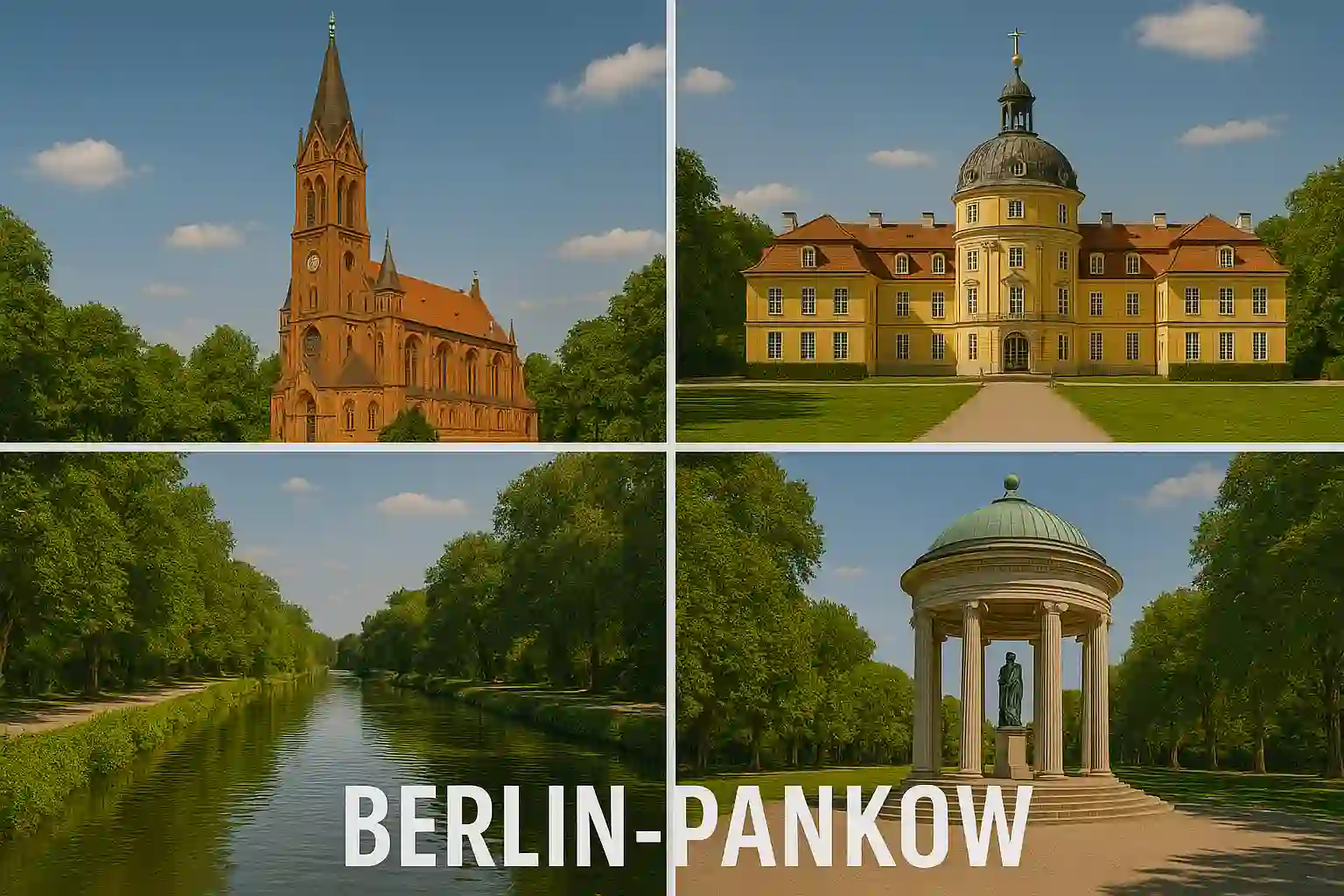
Schönhausen Palace – Baroque Splendor and Political History
The heart of Pankow's historic identity beats in Schönhausen Palace. Built in the late 17th century, this Baroque residence became the summer home of Queen Elisabeth Christine, the wife of Frederick the Great. In later centuries, it witnessed dramatic turns — from Prussian elegance to GDR state receptions. After the Second World War, it even served as the official residence of the first (and only) East German president, Wilhelm Pieck.
Today the palace is part of the Prussian Palaces and Gardens Foundation and welcomes visitors with restored rooms, period furniture, and exhibitions that trace the changing eras of German history. The surrounding Schönhausen Palace Park invites you to slow down — a perfect spot for a stroll among fountains, sculptures, and ancient linden trees.
Bürgerpark Pankow – The Green Soul of the District
Only a few minutes from the busy Wollankstraße, Bürgerpark Pankow feels like another world. Designed in the 19th century as a landscaped garden, it remains one of the most beloved local parks. You'll find small bridges over streams, a rose garden, a café, and even a tiny open-air library hidden among the trees.
On weekends, families come for picnics, joggers trace the winding paths, and musicians play near the gates. In spring, the air fills with magnolia and lilac. It's not spectacular in size, but in atmosphere — it's pure Berlin calm. The park café serves excellent coffee and homemade cakes, making it an ideal spot for a lazy Sunday afternoon.
Prenzlauer Berg – Creativity, Lifestyle, and Urban Beauty
Technically part of the Pankow district, Prenzlauer Berg has long had its own pulse. Once a working-class area filled with crumbling 19th-century buildings, it was rediscovered by artists and students after the fall of the Wall. Today it's one of the most photogenic neighborhoods in Europe — a showcase of beautifully restored façades, cobblestone streets, and a café culture that never sleeps.
Walk along Kastanienallee, explore the boutiques of Oderberger Straße, or sit under the trees at Kollwitzplatz — each corner feels effortlessly stylish. Yet despite its gentrification, Prenzlauer Berg still carries traces of its bohemian past. Look closer, and you'll see small galleries in courtyards, flea markets in schoolyards, and residents chatting on their balconies in the evening light.
Zeiss-Grossplanetarium – A Universe in the City
If you've ever dreamed of touching the stars, head to the Zeiss-Grossplanetarium on Prenzlauer Allee. Built in the 1980s and completely modernized in 2017, it's now one of the most advanced planetariums in Europe. Under its vast dome, visitors can experience 360-degree journeys through the cosmos, narrated with scientific precision and poetic wonder.
The planetarium also hosts concerts, science talks, and immersive film nights — a reminder that Berlin's fascination with innovation extends far beyond art and politics. The architecture itself, a concrete dome framed by trees, is a striking blend of East German modernism and timeless curiosity. Book tickets in advance, especially for weekend evening shows.
Weißensee – A Lake, a Studio, and a Touch of Nostalgia
Moving eastward, Weißensee offers a change of rhythm. The district's name literally means "White Lake," and the lake itself is the centerpiece — calm, surrounded by willows and a beach café where Berliners swim in summer. On warm days, locals bring picnic blankets and stay until sunset.
Nearby lies one of Berlin's most atmospheric sites: the Weißensee Cemetery, the largest Jewish cemetery in Europe still in use. Its moss-covered tombs and winding paths form an open-air memorial that's both moving and peaceful. Weißensee also has a long artistic tradition. The Weißensee Academy of Art continues to attract young designers and sculptors, keeping the creative flame alive in an otherwise quiet area.
Brotfabrik – Culture Baked Daily
At Caligariplatz, just steps from the lake, stands the Brotfabrik — literally "bread factory." Once an industrial building, it's now one of Pankow's liveliest cultural centers. Inside, you'll find an art-house cinema, a small theater, an exhibition space, and a cozy bar that feels like Berlin in the 1990s — informal, thoughtful, slightly anarchic.
The cinema specializes in independent films and documentaries, often followed by talks with directors. The stage hosts everything from experimental theater to children's performances. It's the kind of place where creativity feels close, not curated. Check their program online for current screenings and events.
Mauerpark – Music, Markets, and the Spirit of Freedom
No visit to northern Berlin would be complete without a Sunday in Mauerpark. Once a death strip between East and West Berlin, it has become a symbol of freedom and spontaneous culture. Every Sunday, thousands gather for the famous flea market, where you can find everything from vintage vinyl to handmade jewelry.
But the real magic begins in the amphitheater around 3 p.m., where open-air karaoke turns strangers into a cheering crowd. The energy is contagious — a reminder that Berlin's creativity is rooted not just in art, but in participation. Around the edges, street artists spray murals on remnants of the Wall, while food stalls fill the air with the smell of falafel and grilled halloumi. Arrive early for the best flea market finds, and bring cash.
Botanical Volkspark Blankenfelde-Pankow – Nature and Learning
At the very edge of the city lies a lesser-known treasure: the Botanical Volkspark Blankenfelde-Pankow. Spanning more than 30 hectares, this combination of park, garden, and educational space introduces visitors to over 6,000 plant species. The greenhouses host exotic collections from tropical orchids to desert succulents.
Beyond its beauty, the park has an educational mission: local schools use it for environmental programs, and volunteers help maintain the grounds. It's a quiet example of community engagement — a place where Berlin's love of green spaces meets genuine ecological awareness. Entry is free, making it perfect for budget-conscious nature lovers.
Culinary Discoveries and Local Flavor
Pankow may not be known as Berlin's foodie capital, but it hides authentic flavors. Traditional bakeries stand next to Vietnamese street-food stalls; cozy pubs serve craft beer and schnitzel in old courtyards. In Prenzlauer Berg, the weekend farmer's markets — like the one at Kollwitzplatz every Saturday — bring together organic produce, regional cheese, and international specialties.
Local favorites worth trying:
- Anna Blume – Famous for its floral décor and towering cake platters, perfect for weekend brunch (Kollwitzstraße 83)
- Kulturbrauerei – A former brewery complex that now houses restaurants, bars, and an open-air cinema in summer
- Muse – Cozy neighborhood bistro with seasonal Berlin cuisine and an excellent wine selection (Pappelallee 81)
- Konnopke's Imbiss – Berlin's most famous currywurst stand, operating since 1930 under the U2 tracks (Schönhauser Allee 44A)
- W-Der Imbiss – Creative Vietnamese street food in a tiny shop with big flavors (Kastanienallee 49)
Practical Tips for Your Visit
Getting There:
Pankow is well connected by U-Bahn (U2), S-Bahn (S2, S8, S85), and multiple tram lines (M1, M2, M10, M13). From Alexanderplatz it takes just 15 minutes to reach the district center. Cycling along the Panke river offers a scenic alternative route.
Best Time to Visit:
Spring and early summer (April to June) bring the parks and markets to life, while autumn adds golden colors to the tree-lined streets. Visit Mauerpark on Sundays for the full cultural experience, but weekday mornings offer the most peaceful park explorations.
Local Vibe:
More residential than touristic — so explore slowly, support small cafés, and talk to locals; they'll tell you where Berlin still feels personal. Many shops close on Sundays except in the main Prenzlauer Berg area.
Duration:
A full day allows you to visit Schönhausen Palace, stroll through parks, enjoy lunch in Prenzlauer Berg, and catch sunset at Weißensee Lake. Sunday visits should include Mauerpark.
Streets of Memory – Architecture and Atmosphere
Wandering through Pankow means walking through time. You might pass rows of elegant 19th-century villas, traces of socialist housing blocks, and modern eco-buildings all within a single street. Florastraße and Breite Straße showcase Pankow's historical center, with small cafés, antique stores, and the district's Town Hall, a proud symbol of civic life.
Architecture enthusiasts will enjoy spotting Bauhaus-inspired details and restored façades that survived two world wars and four political systems. Every corner seems to tell a story — not loudly, but with quiet confidence.
A Sense of Place
What makes Pankow special is its balance. It has the greenery of the suburbs, the creativity of the inner city, and the cultural depth of old Berlin. You can cycle from royal gardens to indie theaters, from planetarium domes to market stalls, all within one district.
Visitors often describe Pankow as "the real Berlin" — not because it's untouched by change, but because it reflects the city's evolution: open, layered, and endlessly curious. It's where history and modern life are not separate chapters but overlapping pages of the same story.
Final Thoughts – The Quiet Confidence of Northern Berlin
Berlin-Pankow may not shout for attention, but it rewards those who listen. From the whisper of leaves in Bürgerpark to the echo of voices in Mauerpark's amphitheater, every sound belongs to a city that keeps reinventing itself without losing its soul.
To experience Berlin beyond clichés, come north — to Pankow, where the capital's heart beats a little slower, but no less strong. This is where royal history, creative energy, and urban greenery coexist in a way that feels effortlessly Berlin.
