
Berlin-Köpenick – Water, History, and the Old Town Spirit
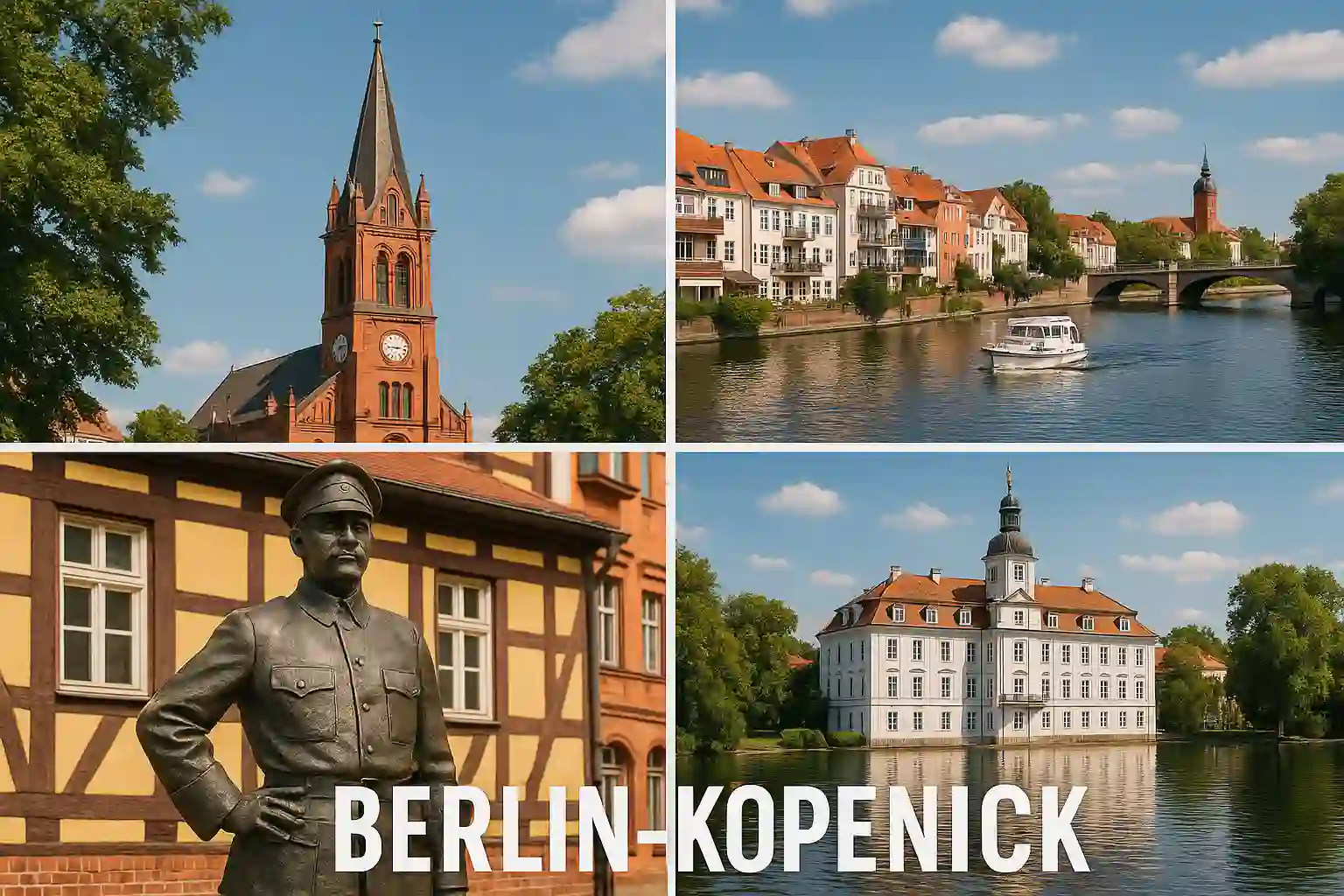
The Old Town – A Hidden Gem on an Island
At the heart of Köpenick lies its Altstadt, a cluster of narrow streets on a small island in the Dahme River. Here, history is tangible: red-brick houses, quiet courtyards, and the unmistakable hum of local life.
The Town Hall (Rathaus Köpenick) dominates the main square, famous for one of Berlin's most legendary stories — the tale of the "Captain of Köpenick." Around it, cafés spill onto cobblestones, locals browse weekend markets, and the scent of roasted coffee drifts from old bakeries.
Unlike the reconstructed centers of other European cities, Köpenick's Old Town feels lived in — authentic, peaceful, timeless.
Köpenick Palace – Baroque Grace on the Water
Just a few minutes' walk from the market square, over a small bridge framed by willows, stands Köpenick Palace — a masterpiece of Baroque architecture rising from its own island in the Dahme.
Originally built in the 17th century for Prince Elector Frederick Augustus, the palace now houses part of Berlin's Museum of Decorative Arts, displaying exquisite furniture, porcelain, and textiles from the Renaissance to Rococo eras.
The interior glows with gold and stucco, but the true magic lies outside: the palace gardens, with their quiet fountains and river views. It's one of those rare places where you can stand in silence, feel history around you, and watch sailboats glide past.
The Legend of the Captain of Köpenick
No story defines Köpenick quite like this one. In 1906, a shoemaker named Wilhelm Voigt disguised himself as a Prussian officer, marched into the town hall with borrowed soldiers, and "confiscated" the city treasury — exposing the blind obedience of Imperial bureaucracy.
The story became legend, inspiring plays, films, and Berlin jokes for over a century. Voigt was later pardoned by Kaiser Wilhelm II, who reportedly admired the audacity of the scheme. A bronze statue of the "Captain" now stands proudly in front of the town hall, reminding visitors that Berlin's humor is as famous as its history.
The Müggelsee – Berlin's Great Lake
To the east of Köpenick stretches the Müggelsee, Berlin's largest lake and one of its most beloved escapes. Framed by forested hills and connected to the Spree, it's a natural playground for swimmers, sailors, and cyclists.
The Strandbad Müggelsee, a classic 1930s lakeside beach, still welcomes crowds in summer, while nearby cafés serve fish and cold beer right by the water. Walking or cycling around the lake reveals hidden spots — small marinas, reed-lined inlets, and the soft echo of oars on calm water.
In winter, when the lake freezes, locals lace up skates and glide across the ice — a Berlin tradition that feels straight from a painting.
The Müggelberge and Müggelturm – A View Over Water and Forest
Rising gently behind the lake are the Müggelberge, the highest natural hills in Berlin. At their summit stands the Müggelturm, a viewing tower that offers one of the most spectacular panoramas of the capital.
From here, you can see an endless horizon of trees and lakes — the Grunewald to the west, Brandenburg's countryside to the east, and the distant skyline of central Berlin shimmering on the horizon.
A small café at the base of the tower invites you to linger, making it the perfect reward after a forest walk or bike ride.
Bridges and the Palace Island – Strolling Between Rivers
Köpenick is a district of bridges — over the Spree, the Dahme, and the countless canals that connect them. The Lange Brücke (Long Bridge) is the most iconic, leading directly to the Palace Island.
As evening falls, the light reflects off the river and the palace façade turns golden. Photographers love this spot — it's Berlin's quieter version of a Venetian view. Here, you can stand between water and sky, between centuries of architecture and the living rhythm of today's Berlin.
Culture in Motion – Art and Industry
Beyond the palace, Köpenick surprises with a mix of modern culture and industrial heritage. In nearby Oberschöneweide, the Industriesalon museum tells the story of Berlin's electrical industry — once a global powerhouse, now reborn as a creative hub.
Old factory buildings have turned into galleries, start-ups, and event spaces. The contrast between copper pipes and digital art installations reflects Berlin's constant reinvention — even in its quieter corners.
Nature Everywhere – Forests, Islands, and River Trails
Köpenick is the greenest of all Berlin districts, covering more than a quarter of the city's forests and waters. The Köpenicker Forst spreads south toward Brandenburg, with hiking and cycling paths that weave through pine woods and wetlands.
Along the rivers, kayaks glide between tree-covered islands like Baumgarteninsel or Hirschgarten, where herons fish in the shallows. It's hard to believe that Alexanderplatz is only 30 minutes away — Köpenick feels like the countryside, but it's pure Berlin.
Food, Coffee, and the Local Way of Life
Life in Köpenick moves at a slower pace. Locals sit in riverside cafés with homemade cake, families share fish platters in beer gardens, and evenings end with a walk by the water.
Recommended spots:
- Rübezahl am Müggelsee – Restaurant with lake views and traditional German dishes
- Café Mokkafee – Quiet coffee spot in the Old Town
- Köpenicker Seeterrassen – Sunset dinners by the river
Sundays often bring small art markets or live music on the Altstadt square — no rush, no pretense, just simple Berlin life.
Festivals and Local Spirit
Throughout the year, Köpenick celebrates its heritage with small but lively events. The "Köpenicker Sommer" festival fills the Old Town with music and crafts every June. At Christmas, the palace courtyard becomes a fairy-tale market with handmade gifts and mulled wine.
These moments reveal the district's soul — proud of its history, yet open to new visitors and ideas.
A District of Water and Memory
Köpenick is Berlin's oldest district, first mentioned in the 12th century, long before the city expanded around it. Its rivers once carried merchants and fishermen; its forests sheltered travelers; its castle hosted princes and presidents.
Today, the water still defines it — reflecting not only the sky but centuries of change. Few places capture Berlin's layers of history so gently and beautifully.
Practical Tips for Visitors
How to get there: Take the S3 line from Alexanderplatz or Ostbahnhof to Köpenick (around 25 minutes).
Best time to visit: Late spring to early autumn for lakes, markets, and boat rides.
Transport tip: Many sights are walkable — rent a bike or e-scooter for exploring around Müggelsee.
Good to know: The palace and museum are closed on Mondays.
Where Berlin Slows Down
Berlin-Köpenick is where the capital exhales — where rivers shape the rhythm of life and history whispers from every brick. It's a place of bridges and reflections, of laughter and legends.
When you stand on the palace island at sunset and hear the church bells ring across the water, you understand what makes this district unique: It's not the Berlin of headlines — it's the Berlin of heartbeats.
